
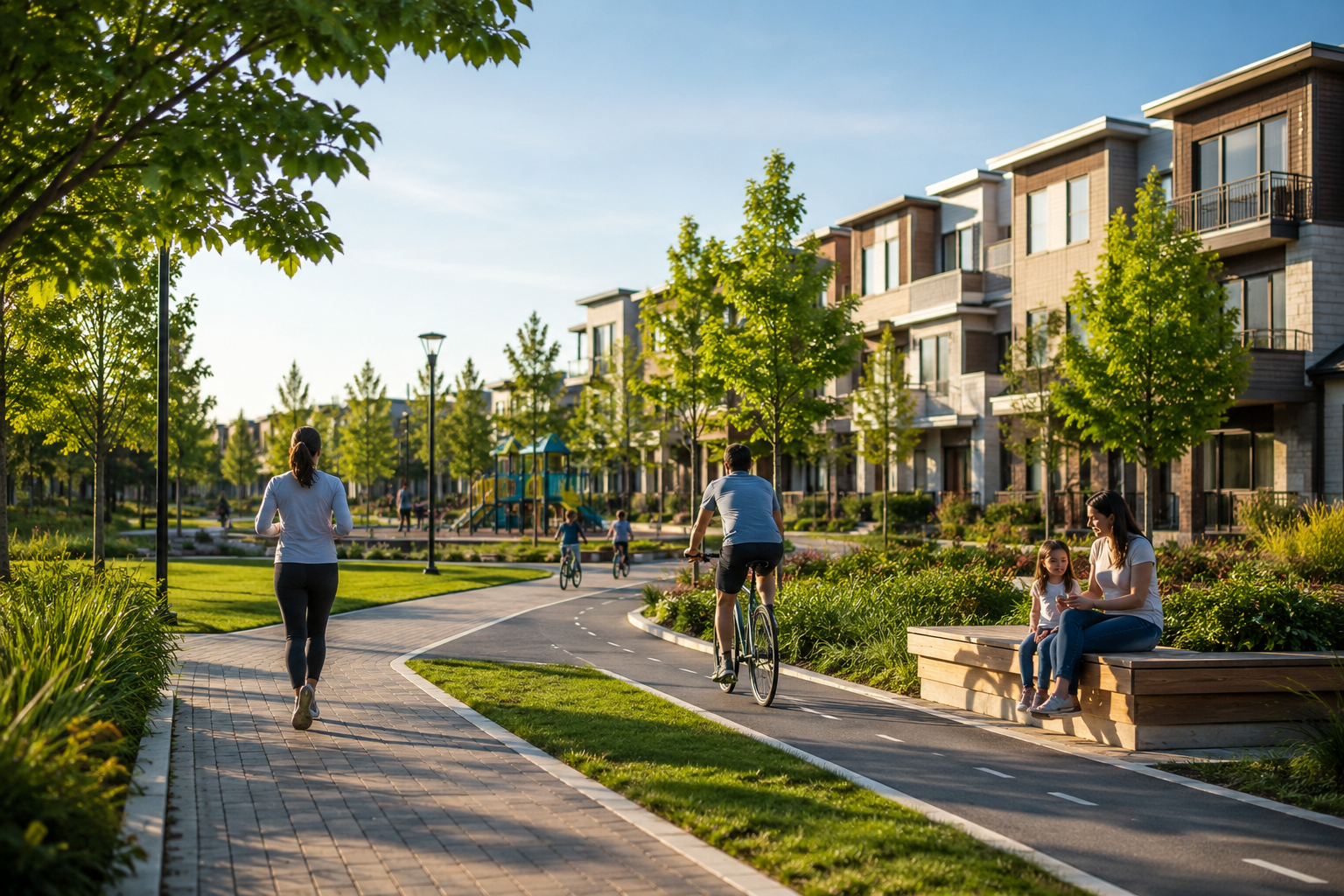
A home can be comfortable, modern and spacious, but the environment outside the front door also shapes everyday life. The design of a residential community can influence whether people walk to nearby destinations, spend time outdoors or simply choose to be more active during an ordinary week.
This is where healthy living in residential communities becomes more than a lifestyle idea. When walking routes, green spaces, recreation areas and shared outdoor spaces are thoughtfully integrated into a neighbourhood, healthy choices can become easier to fit into everyday routines. For today’s homebuyers, that can make the community itself an important part of the living experience.
The Elements That Encourage More Active Everyday Living
Residential developments can promote physical activity because they can make moving and participating in recreational activities more integrated in people’s lives. Instead of having to go somewhere each time in order to engage in physical activity, residential development can make this activity more accessible and closer to one’s residence.
Walkable Streets Turn Everyday Movement Into a Routine
When there are sidewalks that link up to streets, walking becomes a practical exercise within daily activities. One may just walk after dinner or walk to a nearby park or even include walking on part of one’s journey to school.
By making every day locations interconnected by walking routes, people have a better chance of including walking into their routines.
Green Spaces Make Outdoor Time More Appealing
People are more likely to spend time outdoors when green spaces are convenient to reach. A nearby park can become the setting for children’s play, an evening stroll or a relaxed weekend with family rather than somewhere residents need to drive to.
For families, this can make outdoor time feel less like another item on a schedule and more like a natural part of the day. That everyday accessibility is an important consideration when thinking about healthy living in residential communities.
Trails Support Walking, Cycling and Active Recreation
Connected trails can give residents another reason to leave the car at home. They can be used for morning walks, cycling, jogging, dog walking or simply taking a longer route home on a pleasant evening.
The need for accessible opportunities to stay active is significant. The World Health Organization reports that 31% of adults worldwide, or approximately 1.8 billion people, did not meet recommended physical activity levels in 2022. Well-planned walking and cycling routes cannot solve inactivity on their own, but they can make a more accessible choice.
Recreation Areas Give Different Age Groups Ways to Stay Active
Active living does not look the same for everyone. Children may want space to run and play, adults may prefer walking or cycling, while families may look for places where everyone can spend time outdoors together.
A community can support different interests through spaces that encourage:
- Children’s outdoor play
- Informal sports and recreation
- Walking and cycling
- Family activities
- Relaxed outdoor time
This flexibility allows residents to find ways of being active that fit naturally into their own routines.
Shared Areas Promote Active Social Engagement
Healthy living has a social side. Parks, paths and outdoor areas shared by people could be used by residents to interact through walks, playing with children and community activities.
Consider two neighbours who happen to be walking together in the evening and agree to walk one more round. Or, mothers meeting each other in a park where their children are playing. Such interaction can make outdoor exercise more fun while fostering better connections among residents and their neighbours.
Thoughtful Planning Facilitates Healthy Decisions
Perhaps the most important benefit of excellent residential planning is the fact that it does not dictate how individuals should live. It provides them with more chances to make active decisions without altering their habits in any way.
Making a trip on foot to a destination near one’s home, choosing to take a trail rather than drive to a place, or enjoying an hour out in the open air with your loved ones becomes much easier when planning for healthy living in residential communities.
What Should Homebuyers Look for in a Community Designed for Active Living?
For homebuyers looking to purchase a house in an active living community, the focus shouldn’t only be on the amenities available. While a park looks great on paper, whether or not it’s useful will depend, in part, on the ease of access for homeowners.
While comparing a proposed residential development, one should take into consideration:
- Walkable sidewalks: Is it comfortable to walk within the neighbourhood?
- Accessible green areas: Are outdoor spaces easily accessible from your home?
- Alternatives to motor vehicles: Are there alternatives to driving short distances?
- Outdoor recreation: Are there options available for various age groups and preferences?
- Spaces for social interaction: Do the outdoor spaces facilitate socialisation?
- Neighbourhood connections: Is there good connectivity between homes, paths and other neighbourhood spaces?
For buyers exploring communities such as Modo Pickering, looking at these details can provide a better understanding of how the neighbourhood may fit their preferred lifestyle, rather than judging a home solely by its interior features.
Active Community Design Can Support Different Lifestyles
A well-planned neighbourhood does not need to promote one particular version of an active lifestyle. Its value comes from giving different residents opportunities to use the community in ways that suit them.
| Lifestyle | How community design can support it |
| Families with children | Outdoor play, walking routes and green spaces |
| Working professionals | Evening walks, cycling and accessible recreation |
| Active adults | Trails, walking routes and recreational areas |
| Older residents | Convenient pathways, green spaces and gentle outdoor activity |
| Social households | Shared spaces and opportunities to gather outdoors |
This flexibility matters because people’s routines change. A young family may spend more time at playgrounds today, while years later they may prefer walking trails or other recreational spaces. Good planning can accommodate those changing preferences.
A Community Designed for the Way People Want to Live
The best residential projects consider more than where homes will be built. They consider how residents will move through the neighbourhood, spend their free time and connect with the spaces around them.
When active transportation, outdoor recreation, green spaces and shared areas are thoughtfully planned, healthier choices can become a natural part of everyday living. For homebuyers, that makes community design worth considering alongside floor plans, finishes and other features when deciding where to build their future. Modo Pickering offers a community setting where thoughtful planning and everyday lifestyle needs come together. Ultimately, the right neighbourhood can make it easier to build active habits into the moments that make up everyday life.